
Think your Survey is Accurate? Think Again Let's talk Response Bias
When you’re building surveys to gather meaningful insights, one silent disruptor can derail your data before you even begin to analyze it — Response Bias.
At Infer Surveys, we’re all about helping researchers and organizations get to the truth behind the answers. That’s why understanding and mitigating response bias is crucial to creating high-quality surveys.
What Is Response Bias?
Response bias refers to the tendency of survey respondents to answer questions in a way that does not reflect their true thoughts, feelings, or experiences. This bias can be unintentional and is often influenced by question wording, survey format, or the respondent’s desire to appear a certain way.
In short, response bias means your data may not be telling the full or accurate story.
Common Types of Response Bias
Understanding the different types of response bias can help you design surveys that minimize their impact:
1. Social Desirability Bias
Respondents answer questions in a way they think is more socially acceptable or favorable, rather than being honest.
Example: A person may underreport unhealthy habits or exaggerate charitable behavior.
2. Acquiescence Bias
Also known as the “yes-saying” bias, this occurs when respondents tend to agree with statements regardless of their content.
3. Leading Question Bias
Questions that are worded in a way that suggests a certain answer can nudge respondents toward that answer.
Example: “Don’t you think our new app is easier to use?” implies a positive experience.
4. Recall Bias
This happens when participants are asked to remember past events, and their memory may be inaccurate or incomplete.
5. Extreme Response Bias
Some respondents may consistently choose the most extreme response options (like “strongly agree” or “strongly disagree”) regardless of the question.
Why It Matters
Response bias doesn’t just skew individual answers — it can distort trends, mislead stakeholders, and lead to poor decision-making. For organizations relying on surveys to guide product development, customer engagement, or academic research, the cost of bad data is real.
How to Reduce Response Bias in Your Surveys
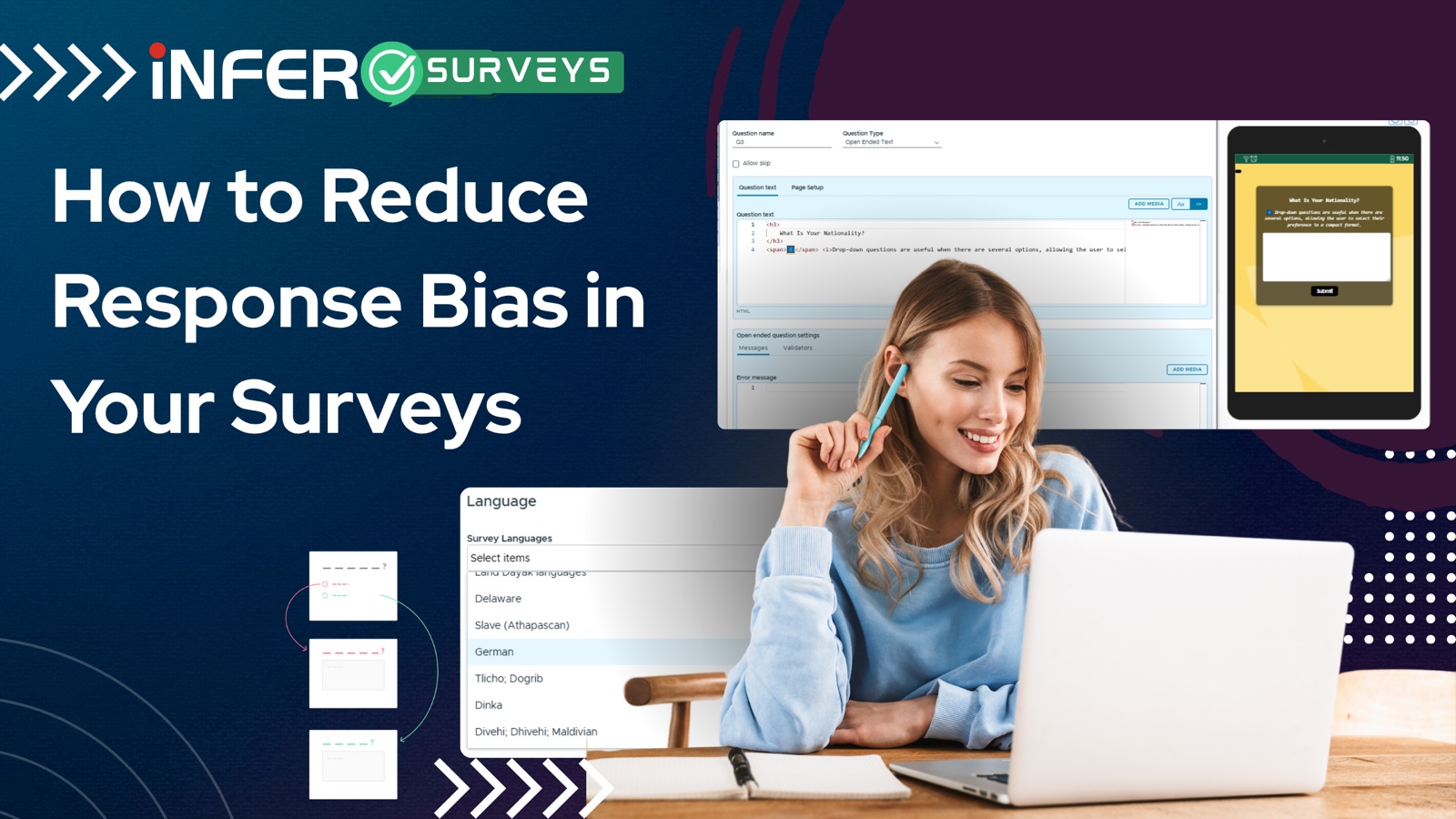
At Infer Surveys, we empower creators with tools to design smarter surveys that reduce bias. Here’s how you can do the same:
- Use Neutral Wording: Avoid loaded or suggestive language.
- Randomize Answer Choices: Prevent order bias.
- Leverage Piping: Personalize follow-up questions based on earlier responses to make the survey feel natural and conversational.
- Add Open-Ended Questions: Let respondents express themselves in their own words.
- Keep It Anonymous: Reduce pressure to give socially desirable answers.
The Infer Advantage
With smart features like Piping, Constructed Lists, and adaptive question logic, Infer Surveys helps you build surveys that listen, engage, and deliver higher-quality insights — free from the noise of bias.
Final Thoughts
Response bias is subtle but powerful. The more you understand it, the better your surveys become — and the more you can trust the data you collect. At Infer Surveys, we’re here to help you design with clarity and confidence.
Ready to build bias-aware surveys?
- Start your next survey with Infer →